Reading Machines (ENGL 578)
A graduate seminar in the English Department, University of Illinois at Urbana-Champaign, Fall 2026.
Course Description
Reading Machines will pivot on the double valence of its title, outlining a literary history of new media from the hand-press period to the present. Our class will draw on scholarship from book history, bibliography, media studies, critical making, and digital humanities, a scholarly intersection N. Katherine Hayles and Jessica Pressman named “comparative textual media.”N. Katherine Hayles and Jessica Pressman, eds. Comparative Textual Media: Transforming the Humanities in the Postprint Era, University Of Minnesota Press (2013), https://www-jstor-org.proxy2.library.illinois.edu/stable/10.5749/j.ctt5hjjtq We will take this comparative, interdisciplinary approach first to better understand machines of reading (e.g. the printed book, the internet) as material, historical, and cultural objects. We will examine how practices of reading, writing, and publishing have interacted—thematically and materially—with contemporaneous technological innovations over the past 250 years.
We will complement our readings with praxis, gaining hands-on experience with textual technologies from letterpress to computer programming, as well as direct experience with archival materials in special collections. Together, our labs and course discussions will help us consider relationships among modes of textual production, reception, and interpretation: including in our purview both “intellectual work,” such as writing, and “manual labor,” such as typesetting. Through our discussions, we will unpack the second valence of the course title, developing greater capacities to critically read machines, what Ursula K. Le Guin called “the active human interface with the material world”Ursula K. Le Guin, “A Rant About ‘Technology’” (2005), https://www.ursulakleguin.com/a-rant-about-technology. We will analyze the political, cultural, and social forces that shape—and are shaped by—textual technologies. We will raise urgent questions around privacy, algorithmic bias, intellectual property, information overload, and textual authority, asking how a richer conception of textual technology might inform our scholarship and approach to our technological present.
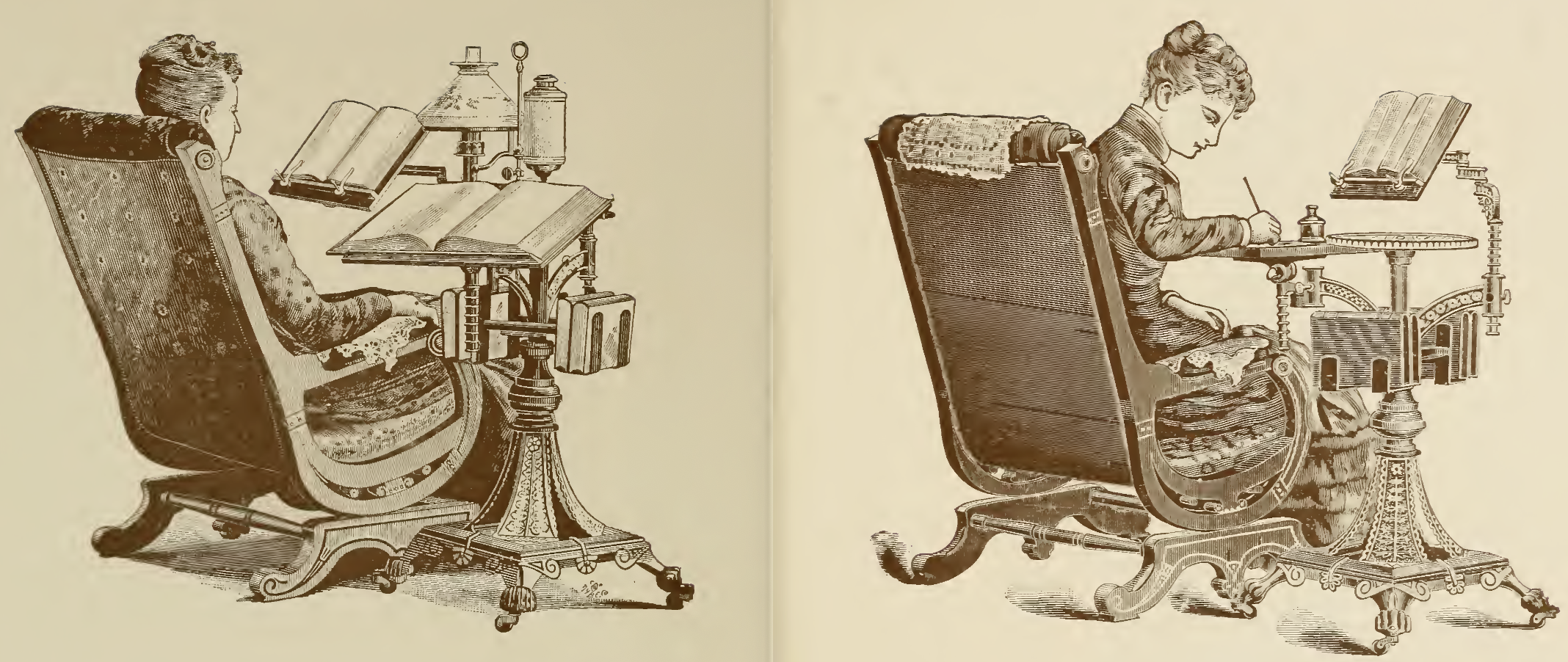
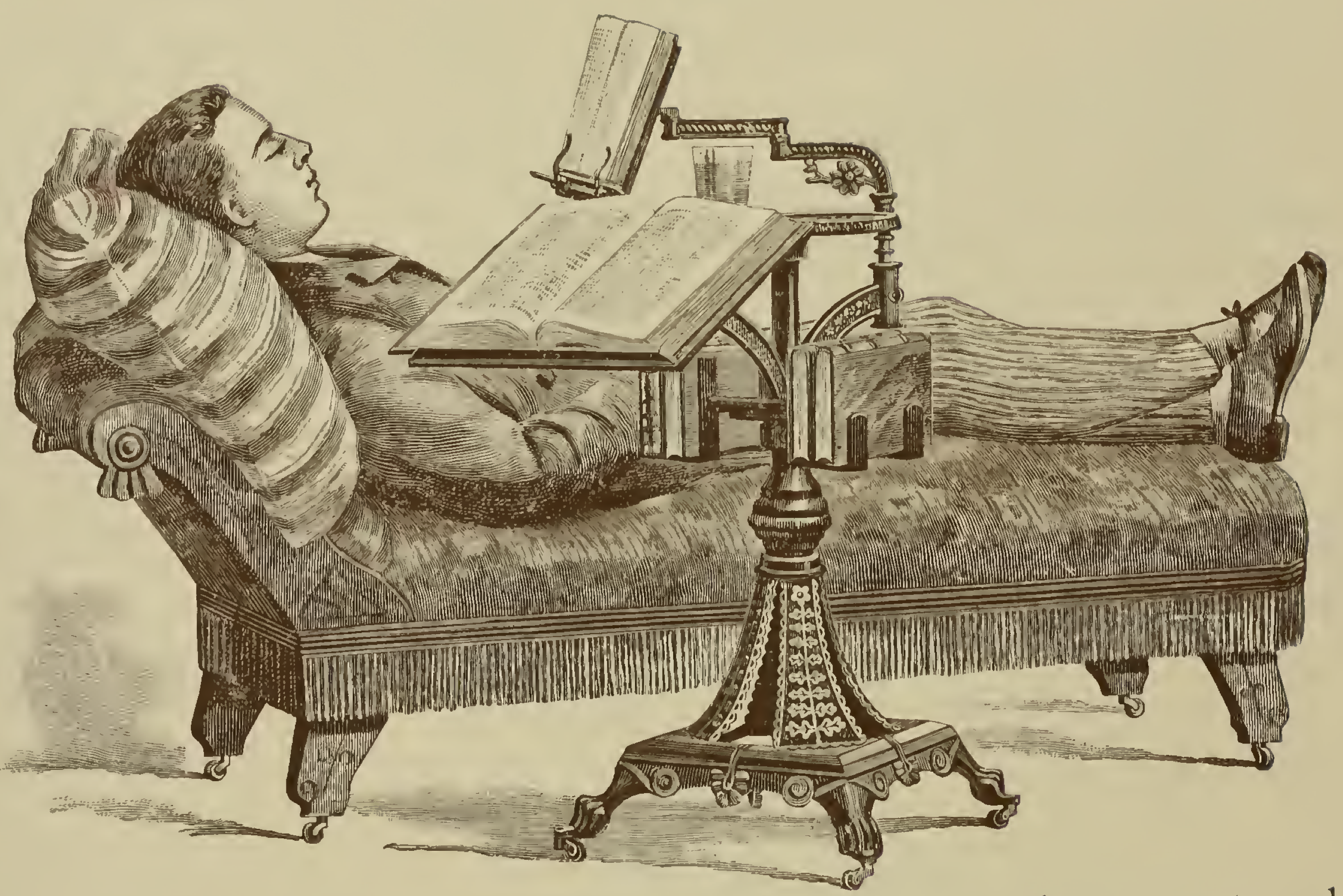 Cover images of The Holloway Reading Stand & Dictionary Holder drawn from https://archive.org/details/hollowayreadings00holl